2012-2013 National Trust Appeal
Royal Oak's Campaign for Knole: Magnificence Preserved
The Forgotten Palace Awakes
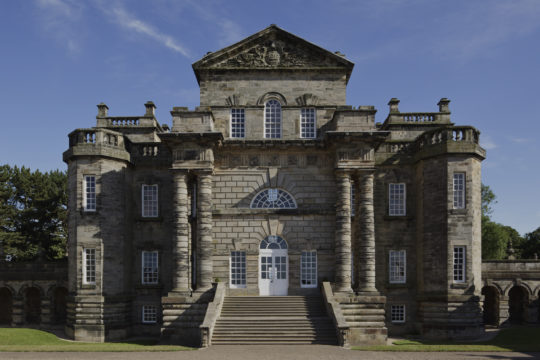
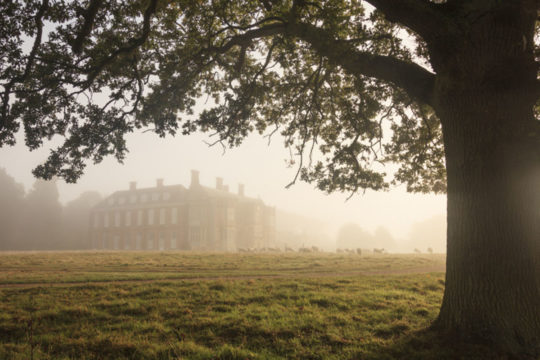
Knole is a legendary house. An ancient manor refashioned as a seat of power, Knole passed through the hands of Henry VIII, Elizabeth I, and thirteen generations of the Sackville family. Thomas Sackville, 1st Earl of Dorset, transformed it into a Renaissance palace, and it remains the largest house in England. Occupying a footprint of four acres, it is a calendar house of 365 rooms, 52 staircases, 12 entrances, and seven courtyards. It is also one of the National Trust's most misunderstood and least visited great houses.
Today you have the opportunity to play a crucial role in Knole's 21st-century history. The National Trust is embarking on the most comprehensive restoration, conservation, and reinterpreation program in its seven decades of ownership, which seeks to restore Knole to its position as one of the most important and celebrated houses in England. Royal Oak seeks your support for this ambitious and visionary project.
Magnificence Preserved
The aims of the Trust's ambitious work at Knole are to ensure the survival of the internationally significant collections and dramatically improve the visitor experience. The principal elements of the project are:
Stabilization of the building fabric and internal environment
The root causes of the damaging humidity and temperature fluctuations will be addressed by stopping water ingress through the roofs, walls, and windows and by installing insulation and under-floor heating elements.
Conservation of the collections
Teams of conservators will address the deterioration caused by centuries of high humidity, temperature fluctuations, pest infestation, light damage, and mold growth. The Trust will construct a permanent on-site conservation studio that will be open to visitors and serve as a unique hands-on education and training facility.
Enhancement of the presentation and interpretation of the showrooms
Advanced museum lighting technologies will subtly pierce Knole's characteristic gloom to enable visitors to clearly see and appreciate important objects. The Trust's curators will work with community and professional advisors to communicate Knole's remarkable stories to visitors of all backgrounds.
Royal Oak's Challenge: The Ballroom
The Royal Oak Foundation seeks to support for the National Trust's work at Knole by funding the restoration and conservation of one of its most significant and spectacular spaces: the Ballroom.
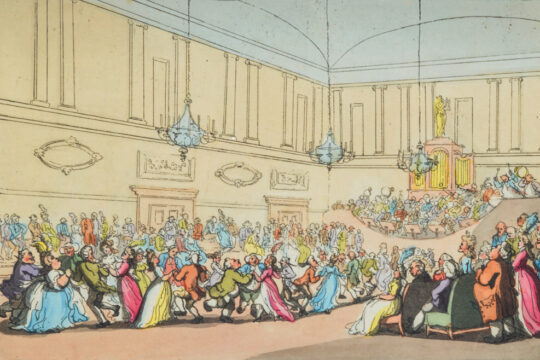
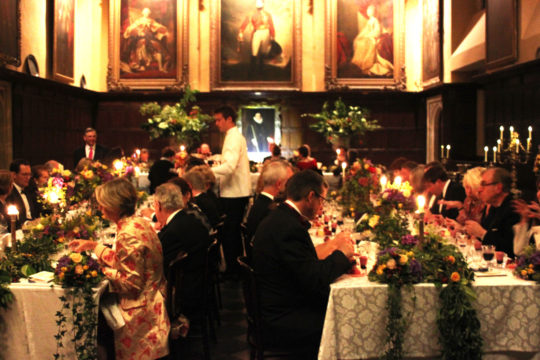
Since its construction by Thomas Bourchier, Archbishop of Canterbury, 500 years ago, the Ballroom has been a showpiece among Knole's principal state rooms. It served as the Archbishop's high great chamber, or principal private dining room, away from the hubbub of the Great Hall just below. In the first decade of the 17th century Thomas Sackville, 1st Earl of Dorset made the space a magnificent showroom. William Portington, the King's carpenter, and Richard Dungan, the King's plasterer, created the magnificent oak paneling, carved frieze, and plasterwork ceiling. The great chimneypiece and overmantel are the work of Cornelius Cure, master mason to the Crown, and rank among the finest works of Renaissance sculpture in Britain. Today the Ballroom survives as one of the most important and complete examples of early Jacobean interior decoration in Britain.
The Ballroom is first referred to as such in the 1765 inventory, and its current presentation, hung with Sackville family portraits and enriched with French 17th- and 18th-century furniture, reflects the taste of Victoria Sackville-West, Vita Sackville-West's mother. The portraits depict some of those most closely associated with Knole by some of the greatest artists of their day.
Work in the Ballroom will begin with the removal of the contents, including the paneling and frieze, which is showing sign of splitting and cracking caused by dampness. Furniture, textiles, paintings, other artworks will all undergo extensive remediation in the on-site conservation studio. The Ballroom's floor and stuccowork ceiling both show evidence of structural and water damage and must be carefully investigated and repaired. Before the contents are returned, curators will develop new layout, lighting and interpretation plans.
Of all the state rooms, the Ballroom offers the most exciting possibilities for research and discovery. Behind the paneling are hidden windows and wall treatments that have not been seen in over 400 years. Our generation will be able to see the Archbishop's high great chamber as the original craftsman designed it. This itself will provide remarkable new interpretive material for future generations.
For More information, please contact:
Sean E. Sawyer, Executive Director
The Royal Oak Foundation
35 West 35th Street - 12th fl
New York, NY 10001
tel: 212 480 2889
fax: 212 785 1234