A silk slipper of King James II takes center stage in Killerton’s annual fashion exhibit

Rare silk slipper with connection to James II held by costume curator Shelley Tobin © National Trust Images/Steve Haywood
A rare silk slipper once believed to have been owned by King James II is stepping into the spotlight at Killerton, Devon, as part of the National Trust property’s annual fashion exhibition.
The delicately made mule-style slipper, dating from the late 17th century, is part of the celebrated costume collection at Killerton and is thought to be connected to King James II following a recorded royal visit to Coventry in 1687.
The slipper came to the National Trust through pioneering costume collector Paulise de Bush, whose collection was left to the charity after her death in 1975. The collection arrived at Killerton in the late 1970s and has since become one of the most important historic dress collections in the country.
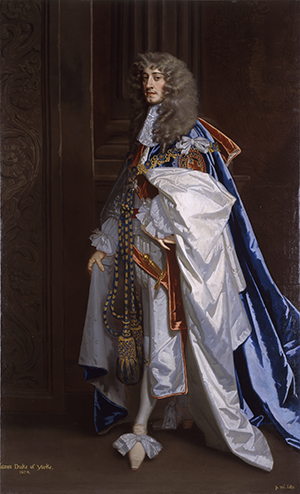
King James II as Duke of York in his Garter Robes by Sir Peter Lely © National Trust Images/Ian Blantern
Slippers, or mules, were items primarily worn informally indoors but could still be highly decorated. The slipper at Killerton is made of fine‑grained leather with a warm reddish tone, and the upper is woven brocaded silk hand‑stitched to the sole with white thread. Over the years, the silk has faded to a golden yellow, revealing a floral pattern woven in blue‑green thread, likely once a brighter green.
It would have been entirely handmade to fit the gentleman who wore it. This is a true luxury item, elite fashion for a wealthy man of status The pair was likely worn with a matching loose‑fitting silk banyan or dressing gown.
Research into the slipper’s origins has revealed a tantalizing royal connection. King James II is recorded as visiting Coventry in 1687, as part of a tour of England where a grand banquet was held in his honor at the Guildhall. He stayed in rooms in what later became known as Palace Yard – buildings that were destroyed during the Coventry Blitz in 1940.
The visit came at a sensitive moment in James II’s reign, as he sought support for the repeal of the Test Acts – laws that barred Catholics and other non‑Anglicans from holding public office and military positions.
It was customary for royal visitors to leave gifts for their hosts, often embroidered gloves. In this case, it is possible that a pair of luxurious silk slippers was left behind. Only one slipper is known to survive today, raising the intriguing possibility that its pair may still exist – perhaps separated through inheritance and lost to time.
Inside the slipper is a now-faded historic label, accompanied by a handwritten museum tag from Paulise de Bush’s own private costume museum. Rare photographs show the slipper on display in her museum – pinned to a board, as was the fashion of the time – offering a fascinating glimpse into early costume collecting practices.
While no formal provenance survives to confirm exactly how the slipper came into de Bush’s possession, research is ongoing. The absence of detailed acquisition records means some elements of the slipper’s journey may remain elusive, but its survival alone offers a remarkable connection to royal life, fashion and collecting history.
“It is possible that the slipper’s mate may be out there somewhere. I wonder if one day, it may come to light.”
Shelley Tobin, Killerton’s costume curator, explains, “This slipper brings together many qualities we value in historic clothing – craftsmanship, social context, and the traces of the people who made and used it. While we may never know exactly how the slipper changed hands, it invites us to imagine royal travel, gift-giving and the long journeys objects can take through history before arriving in our care.”
Visit the Exhibit at Killerton
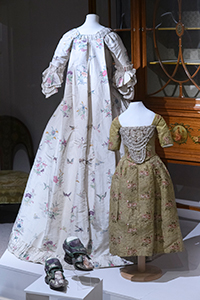
History off the Hanger is on display from February 14 through November 1, 2026.
The exhibit explores the human tales woven into Killerton’s extraordinary collection of historic dress. Outfits range from royal silk to space-age synthetics, each revealing why clothing matters, not just as textile or craft, but as evidence of lives lived, identities shaped, and memories held.
Find out more at www.nationaltrust.org.uk/killerton


