This week, treat yourself with these recipes of tasty British sweets
Republished with permission from The National Trust’s Complete Traditional Recipe Book.
Lemon Madeira Cake
The “Madeira” in the title refers to the Madeira wine, a Portuguese wine which was popular in 18th century England. At that time, cake was often eaten with a glass of fortified wine rather than tea, and was correspondingly plain. The Madeira wine was the perfect accompaniment to this old-fashioned cake. A medium sherry tastes good, too. This recipe was given to the National Trust as the favourite of an old lady who always took her cake in this traditional 18th-century fashion.
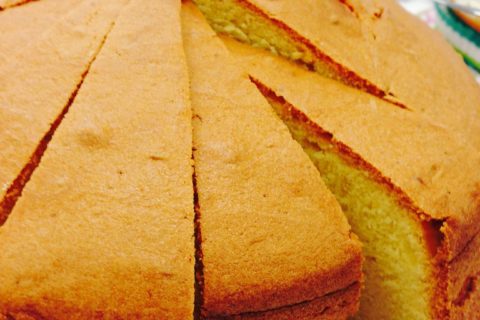
Madeira Cake/©Flickr, Queensland University of Technology (QUT)
Makes a 15cm (6in) cake
Ingredients
- 100g (4oz) soft butter
- 125g (5oz) caster sugar
- 2 eggs
- Zest and juice of 1 lemon
- 225g (8oz) self-raising flour
Method
- Preheat the oven to 150° C, 300 °F, gas mark 2.
- Grease and line a 15 cm (6in) round deep cake tin.
- Cream together the butter and sugar until light and fluffy.
- Beat in the eggs a little at a time; then add the rind and juice of a lemon.
- Gently fold in the flour using a large metal spoon and spoon the mixture into the lined cake tin.
- Place in the centre of the oven and bake for approximately 1 hour.
- Cool on a wire rack.

Victoria Sponge Cake
Victoria Sponge cake is an English cake made of genoise, very light, hence the name “sponge cake”. The name of the cake refers to Queen Victoria, the sponge cake being served at court during the famous afternoon tea (high tea). There are three important rules for making any sponge cake – firstly, all the ingredients must be at room temperature; secondly, the flour and sugar must be sifted very well; and finally, the longer you beat it, the lighter it is.
Makes a 23cm (9in) cake
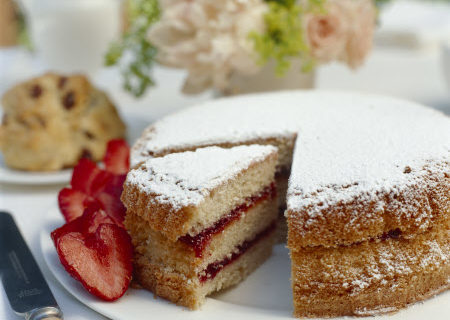
Victoria Sponge cake with strawberries/©National Trust Images, Andreas von Einsiedel
Ingredients
- 4 large eggs
- Equal weights to the eggs of butter, caster sugar and self-raising flour
- Icing sugar, to dust
Flavourings
- Either a few drops of vanilla essence or zest of vanilla
- 1 lemon or zest of vanilla
- 1 orange
For the filling
- 3-4 tablespoons raspberry jam
- 150ml (1/4 pint) double cream, whipped stiff
Method
- Preheat the oven to 175 °C, 350 °F, gas mark 4.
- Line a 23cm (9in) springform tin with baking paper.
- Beat the butter with an electric beater, a wooden spoon or a balloon whisk until pale in colour and creamy. Gradually beat in the sugar, and beat vigorously at least another 5 minutes once the sugar is in. The mixture should almost double in volume and be very pale in colour.
- Beat in the eggs, one at a time, beating vigorously between additions. If the mixture curdles, beat in a small spoonful of the measured flour with the egg. Stir in the chosen flavouring at this point.
- Fold in the flour, very gently. Spoon the mixture into the prepared tin.
- Bake for about 45 minutes in the preheated oven. The cake is cooked when a skewer inserted in the centre comes out clean.
- Cool on a wire rack. When cold, cut the cake in half and spread the bottom half with raspberry jam and whipped cream. Put the top back on lightly and dust with icing sugar.
Grantham Gingerbreads
Grantham Gingerbreads were first created in 1740 when a local baker in Grantham, Lincolnshire, while making a flat, hard biscuit for travellers called Grantham Whetstones, added a raising agent to the mixture by mistake. Since then, Grantham has taken its gingerbreads to its heart. It is known as “the gingerbread town” and its local football team are known as “The Gingerbreads”.
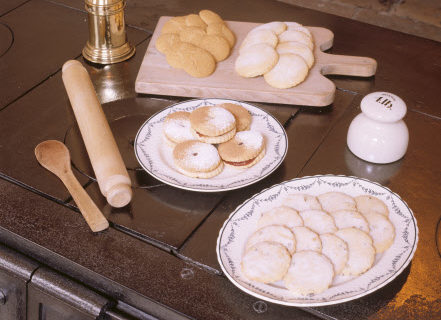
Biscuits – Grantham gingerbreads, orange crisps, Melbourne wakes cakes, Linzer biscuits/©National Trust Images, Andreas von Einsiedel
Makes approximately 30 gingerbreads
Ingredients
- 100g (4oz) butter
- 350g (12oz) sugar
- 1 egg beaten
- 2-3 teaspoons ground ginger
- 250g (9oz) self-raising flour
Method
- Preheat the oven to 145°C, 280°F, gas mark 1. Grease a large baking tray.
- Beat the butter in a bowl with a wooden spoon to soften it, then work in the sugar followed by the beaten egg.
- Sift the ground ginger into the flour and add to the mixture, which will be quite dry and crumbly – a bit like shortbread.
- Using your hands, bring the mixture together into about thirty small balls the size of a walnut and place on the baking tray, leaving plenty of space between each one.
- Cook in the oven for 30 minutes. The gingerbreads should remain pale in colour and have a texture and appearance rather like a macaroon.


