• Donate
  • View Cart
  • My Account
    • Orders
    • Account Details
    • My Events
  • Members’ Area
    • Travel
    • Magazine Discounts
  • Programs & Events
    • 2025 Annual Benefit
    • Current Season
    • Past Season
    • Speakers
  • Travel
    • Britain Tours 2026
    • Other International Trips
    • Hotels and Accommodation
    • National Trust Rentals
  • Impact
    • 2025 Campaign
    • 2024 Grants
    • Royal Oak Conservation Studio
    • Recent Campaigns
    • The Nigel Seeley Fellowship
    • The Damaris Horan Fellowship
  • Support Us
    • 2025 Campaign
    • Membership
    • Heritage Circle
    • Annual Fund
    • Lecture Support
    • Legacy Circle
    • Partners
    • Ways to Give
  • About Us
    • Board of Directors
    • Staff
    • Press and News
    • FAQ
    • About The National Trust
    • Annual Reports and Financial Information

The Royal Oak Foundation

  • Donate
  • Buy a Membership
  • View Cart
  • My Account
    • Membership Upgrade
    • Orders
    • Account Details
    • My Events
    • Membership Details
  • Members’ Area
    • Travel
    • Magazine Discounts
  • Programs & Events
    • 2025 Annual Benefit
    • Current Season
    • Past Season
    • Speakers
  • Travel
    • Britain Tours 2026
    • Other International Trips
    • Hotels and Accommodation
    • National Trust Rentals
  • Impact
    • 2025 Campaign
    • 2024 Grants
    • Royal Oak Conservation Studio
    • Recent Campaigns
    • The Nigel Seeley Fellowship
    • The Damaris Horan Fellowship
  • Support Us
    • 2025 Campaign
    • Membership
    • Heritage Circle
    • Annual Fund
    • Lecture Support
    • Legacy Circle
    • Partners
    • Ways to Give
  • About Us
    • Board of Directors
    • Staff
    • Press and News
    • FAQ
    • About The National Trust
    • Annual Reports and Financial Information

Stories

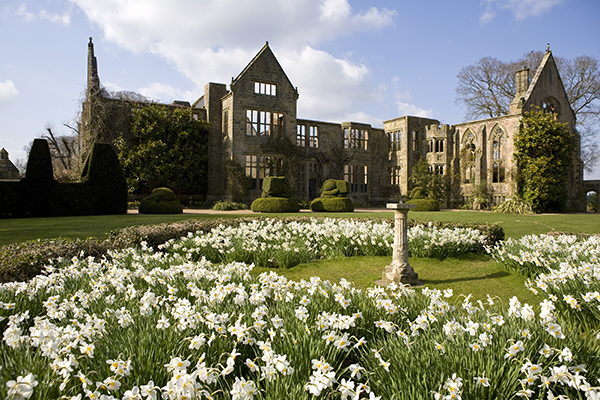
The ruins from the Main Lawn in April at Nymans, West Sussex. The house was destroyed by fire in 1947, and only the north-east end rebuilt.

The Gardens at Nymans in Sussex

April 3, 2019

A crafted work of art and theater

Nymans was the home of the talented and creative Messel family. Today it is one of England’s most inspiring gardens. Exuberant floral displays, captivating views and stunning plant collections are designed to impress, while its rooms, corners and archways offer intimate and secret places in which to relax.

Anne Messel, the granddaughter of Ludwig Messel who built Nymans, once said,

“An English garden has to be lived in all year round; so to touch the aesthetic sense it must like a house, embrace something deeper than a fine collection or architectural feat. It should also be a home, reflecting the personalities and whims of those that have trod its paths and the aspirations of its makers and improvers; mirroring a glimpse from each generation, that time and growth have moulded into a harmonious whole.”

Within its 33 acres, the garden holds stunning collections of magnolias, berberis, eucryphias, camellias and rhododendrons, together with one of the largest collections of South American plants in the United Kingdom. The sheer range of its ornamental plants—from trees and shrubs to roses, annuals, climbers and rock plants—is also impressive.

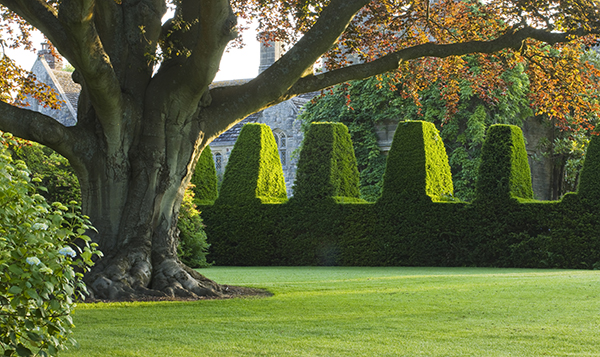
But perhaps more than anything else, what makes Nymans so appealing is its aesthetic diversity. Its pleasing mix of formal and informal areas means that visitors can wander from one surprise to the next. Topiary gardens, manicured lawns, exquisite borders and immaculate rock and heather gardens happily co-exist with wilder areas—naturalistic lawns and flower meadows, and exuberant sub-tropical terrace and a recently planted winter garden.

Explore the gardens below.

The Wall Garden
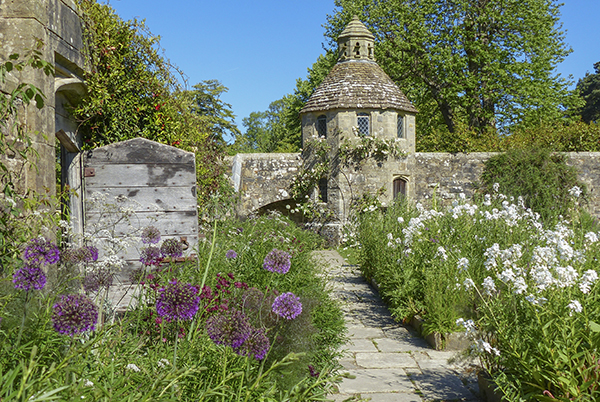
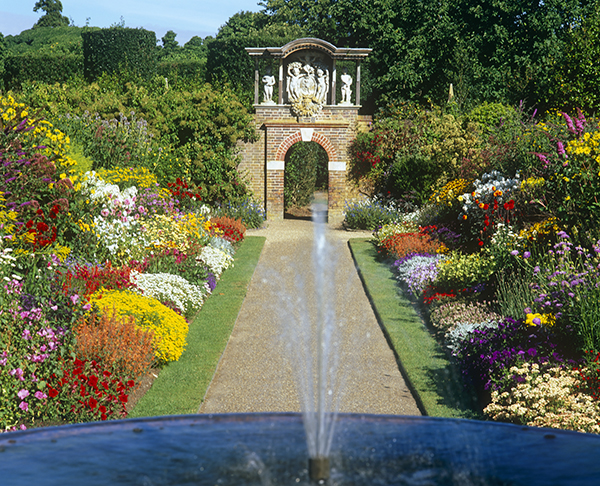
The double herbaceous borders in the Walled Garden in August
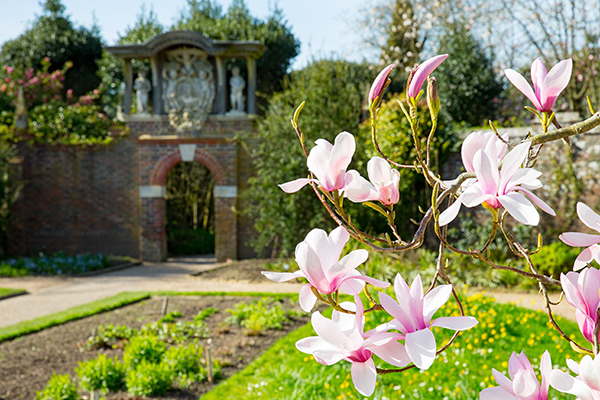
Magnolia blossoms in spring
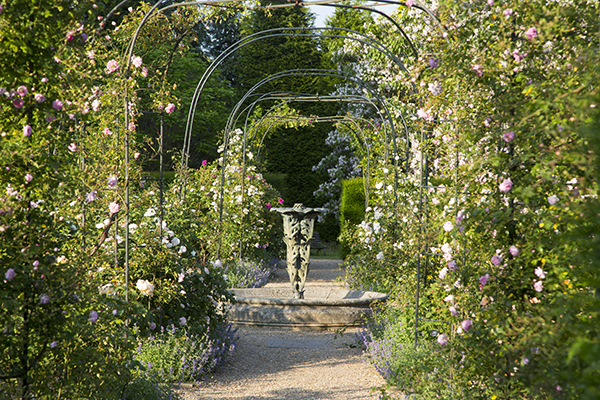
The Messel Fountain in the Rose Garden was designed by Vivien ap Rhys Pryce, and takes the form of a bronze rose
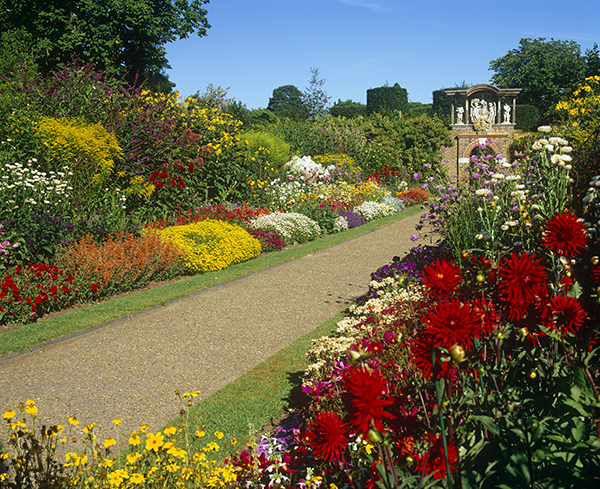
Colorful summer borders in the gardens
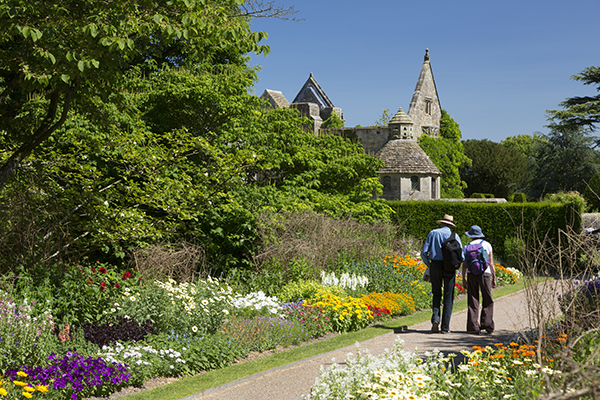
The ruins from the Main Lawn in April. The house was destroyed by fire in 1947, and only the north-east end rebuilt
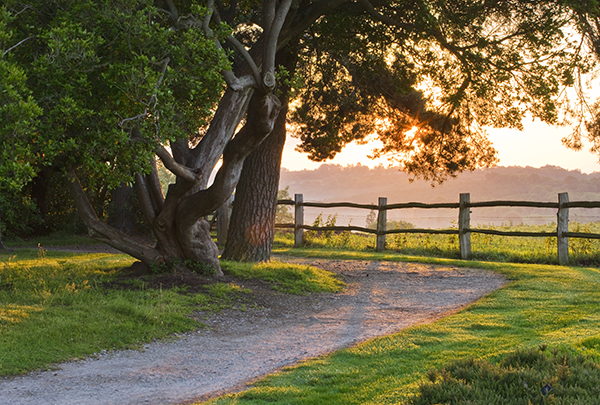
Sunrise in June
The topiary yew hedge
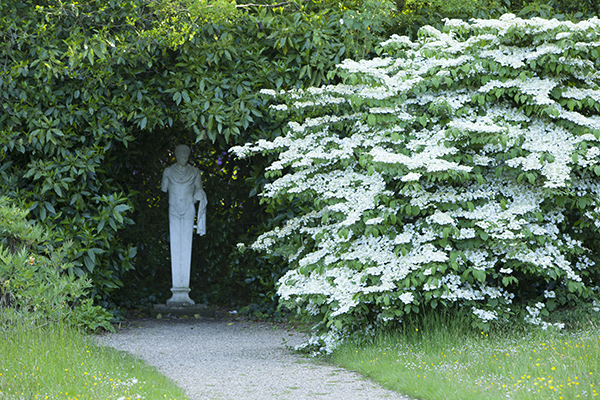
White-flowering hydrangea beside a statue in the Wall Garden
Looking over the fountain to the double herbaceous borders in the Wall Garden in August
Reprinted from the National Trust.

Share this...
Share on facebook
Facebook
Share on pinterest
Pinterest
Share on twitter
Twitter
Share on linkedin
Linkedin
Post navigation
Previous StoryNext Story

Search the Blog

Filter by Category

  • Houses & Buildings
  • Gardens & Parklands
  • Art & Furniture
  • Nature & Wildlife
  • Cooking & Traditions
  • Families & People
  • Membership
  • Annual Fund
  • Heritage Circle
  • Legacy Circle
  • Royal Oak Lecture Support
  • Ways to Give
  • Partners
  • Rebuilding Trelissick’s Glasshouse
  • Royal Oak Conservation Studio
  • Annual Reports and Financial Information
  • About Us
  • Board of Directors
  • Staff
  • About The National Trust
  • FAQ
  • Privacy Policy
  • Terms & Conditions

general@royal-oak.org
lectures@royal-oak.org
T: 212.480.2889 | 800.913.6565

Copyright © 2025 The Royal Oak Foundation. All rights reserved.
20 W 44th Street, Suite 606, New York, New York 10036-6603

This website uses analytical and tracking cookies to improve your user experience and for statistical purposes. By continuing to browse on this website, you agree to the use of such cookies.